Tarot Card Reading Training

- Chapter 1. What is Tarot and Why You Should Learn to Read It
- Chapter 2. History and Evolution of Tarot
- Chapter 3. Structure of the Tarot Deck: Major and Minor Arcana
- Chapter 4. Meaning of Major Arcana Cards
- Chapter 5. Meaning of Minor Arcana Cards by Suits
- Chapter 6. Types of Tarot Spreads and Layouts
- Chapter 7. How to Formulate Questions Correctly
- Chapter 8. Interpretation of Cards in Context
- Chapter 9. Tarot and Intuition: How to Learn to Hear Inner Voice
- Chapter 10. Practice of Learning Tarot Reading
- Chapter 11. Author Techniques, Secrets, and Tips for Advanced Users
- Chapter 12. Full Description of All Tarot Cards
- Major Arcana (22 cards)
- Minor Arcana
- Suit of Cups (Emotions, Love, Relationships)
- Suit of Swords (Thoughts, Intellect, Conflict)
- Suit of Pentacles (Material World, Finances, Career)
- Suit of Wands (Energy, Action, Passion, Creativity)
- Chapter 13. Tarot as a Path of Personal and Spiritual Growth
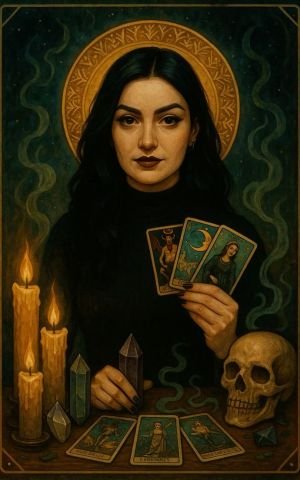
Tarot card reading is not just a mystical art, but a profound tool for self-knowledge and situational analysis that has helped people for centuries. Today, interest in Tarot is rapidly growing, and more and more people want to learn how to read Tarot cards. This article is for those who want to learn the basics and delve deeper into learning how to read Tarot cards.
Chapter 1. What is Tarot and Why You Should Learn to Read It
Tarot cards are not just a tool for divination but a deep system of symbols that helps to understand oneself, grasp life processes, and make conscious decisions. Tarot opens access to intuition, develops awareness, and helps to see what is hidden from the rational mind. Learning Tarot becomes not only a way to predict events but also a powerful method of self-discovery and personal growth.
Chapter 2. History and Evolution of Tarot
The first mentions of Tarot cards appeared in Europe in the 14th century. They were initially used as playing cards, but over time, the esoteric tradition of their use for divination and self-knowledge spread. Occultists and philosophers of the 18th–19th centuries, such as Eliphas Levi, Papus, and Arthur Edward Waite, gave Tarot deep symbolic meaning. Today, Tarot is a synthesis of mysticism, psychology, and personal practice.
Chapter 3. Structure of the Tarot Deck: Major and Minor Arcana
The Tarot deck consists of 78 cards, divided into:
-
Major Arcana (22 cards) — reflect key life stages and spiritual archetypes (The Fool, The Magician, The High Priestess, etc.).
-
Minor Arcana (56 cards) — describe everyday situations, divided into four suits: Cups, Swords, Pentacles, and Wands.
Each card has its own symbolic meaning, upright and reversed interpretation, and can be read in context.
Chapter 4. Meaning of Major Arcana Cards
Each Major Arcana card represents an archetype or spiritual stage:
-
The Fool — a new beginning, freedom;
-
The Magician — potential and power;
-
The High Priestess — intuition and the unconscious;
-
Death — transformation and transition;
-
The World — completion and integration.
These cards reflect deep psychological and life processes.
Chapter 5. Meaning of Minor Arcana Cards by Suits
Each suit corresponds to a particular sphere of life:
-
Cups — emotions, relationships, love;
-
Swords — thoughts, decisions, conflicts;
-
Pentacles — finances, work, material matters;
-
Wands — energy, creativity, action.
Each suit contains 10 numbered cards and 4 court cards (Page, Knight, Queen, King), each of which adds nuances and levels of interpretation.
Chapter 6. Types of Tarot Spreads and Layouts
Spreads are structured schemes in which cards are laid out to answer a question:
-
One-card spread — for simple insight or daily message;
-
Three-card spread — Past–Present–Future;
-
Celtic Cross — classic 10-card spread for deep analysis;
-
Relationship spread, Career spread, etc.
Choosing the right spread helps to focus the question and get more precise information.
Chapter 7. How to Formulate Questions Correctly
The quality of the question influences the depth of the Tarot reading. Open, constructive, and clear questions work best:
-
Instead of “Will I get the job?” — “What can help me get the desired job?”
-
Avoid yes/no questions, rhetorical or emotionally charged ones.
A well-formulated question is the key to an effective session.
Chapter 8. Interpretation of Cards in Context
Each card changes its meaning depending on:
-
Position in the spread;
-
Nearby cards;
-
The situation and the question asked.
It is important to read the cards in context, not in isolation. The story formed by the cards is more important than individual interpretations.
Chapter 9. Tarot and Intuition: How to Learn to Hear Inner Voice
Intuition is the foundation of successful Tarot practice. To develop it:
-
Meditate on cards;
-
Keep a diary of impressions and predictions;
-
Trust first impressions and images;
-
Learn to read symbols intuitively, not just from books.
Practice strengthens the connection between the reader and the deck, opening access to deeper levels of understanding.
Chapter 10. Practice of Learning Tarot Reading
Theory is only part of the path. To truly learn to work with Tarot, you need to practice daily or at least regularly. Recommended methods:
-
Pull one card a day and write down interpretations;
-
Analyze events after the day and compare with the card;
-
Practice spreads on real or fictional questions;
-
Exchange practice with other students.
Practice develops confidence, memory, and fluency in working with the deck.
Chapter 11. Author Techniques, Secrets, and Tips for Advanced Users
After mastering the basics, many feel the need for deeper, individual approaches. The author recommends:
-
Creating your own spreads;
-
Meditating on Major Arcana;
-
Working with numerology and astrology through Tarot;
-
Reading cards as a story;
-
Avoiding stereotypes and “fear” cards.
Tarot is a flexible tool that adjusts to the reader’s style. The main thing is awareness and clarity of intention.
Chapter 12. Full Description of All Tarot Cards
The Tarot deck consists of 78 cards, divided into:
-
22 Major Arcana — depict archetypal energies, deep psychological and spiritual stages.
-
56 Minor Arcana — reflect everyday life and are divided into four suits: Cups, Swords, Pentacles, Wands, each containing 14 cards (Ace to King).
Major Arcana (22 cards)
-
The Fool (0) — new beginnings, spontaneity, trust in life, freedom.
-
The Magician (I) — action, manifestation, talent, resourcefulness.
-
The High Priestess (II) — intuition, secrets, inner knowledge.
-
The Empress (III) — fertility, abundance, creativity, mother energy.
-
The Emperor (IV) — structure, authority, responsibility, stability.
-
The Hierophant (V) — tradition, knowledge, mentor, spiritual teaching.
-
The Lovers (VI) — choices, love, union, harmony.
-
The Chariot (VII) — willpower, victory, movement, direction.
-
Strength (VIII) — inner strength, patience, compassion, courage.
-
The Hermit (IX) — introspection, solitude, guidance, inner search.
-
Wheel of Fortune (X) — cycles, fate, karma, turning point.
-
Justice (XI) — fairness, balance, law, truth.
-
The Hanged Man (XII) — pause, sacrifice, change in perspective.
-
Death (XIII) — transformation, endings, renewal, letting go.
-
Temperance (XIV) — moderation, healing, balance, harmony.
-
The Devil (XV) — temptation, addiction, materialism, bondage.
-
The Tower (XVI) — sudden change, collapse of illusions, awakening.
-
The Star (XVII) — hope, inspiration, spiritual clarity.
-
The Moon (XVIII) — illusion, the unconscious, fear, dreams.
-
The Sun (XIX) — success, joy, truth, illumination.
-
Judgement (XX) — rebirth, realization, accountability, awakening.
-
The World (XXI) — completion, integration, wholeness, fulfillment.
Each card of the Major Arcana reflects a powerful inner process or life phase. These cards often point to major transformations, karmic events, or deep insights.
Minor Arcana
Split into four suits, each representing a different life area:
Suit of Cups (Emotions, Love, Relationships)
-
Ace of Cups — emotional beginning, love, open heart
-
2 of Cups — connection, partnership, mutual feelings
-
3 of Cups — celebration, friendship, community
-
4 of Cups — apathy, missed opportunity, withdrawal
-
5 of Cups — grief, regret, loss
-
6 of Cups — nostalgia, childhood, past emotions
-
7 of Cups — illusions, choices, dreams
-
8 of Cups — leaving, moving on, emotional growth
-
9 of Cups — satisfaction, emotional fulfillment, wish granted
-
10 of Cups — family, happiness, emotional harmony
-
Page of Cups — message of love, emotional openness
-
Knight of Cups — romantic proposal, idealism
-
Queen of Cups — intuition, empathy, nurturing
-
King of Cups — emotional maturity, control, wisdom
Suit of Swords (Thoughts, Intellect, Conflict)
-
Ace of Swords — clarity, truth, mental breakthrough
-
2 of Swords — indecision, blocked emotions
-
3 of Swords — heartbreak, sorrow, betrayal
-
4 of Swords — rest, recovery, meditation
-
5 of Swords — conflict, defeat, selfishness
-
6 of Swords — transition, moving forward
-
7 of Swords — deception, strategy, secrecy
-
8 of Swords — limitation, fear, mental traps
-
9 of Swords — anxiety, nightmares, guilt
-
10 of Swords — painful ending, rock bottom
-
Page of Swords — curiosity, vigilance, new ideas
-
Knight of Swords — action, boldness, impulsiveness
-
Queen of Swords — intellect, honesty, independence
-
King of Swords — authority, logic, ethical judgment
Suit of Pentacles (Material World, Finances, Career)
-
Ace of Pentacles — new opportunity, prosperity
-
2 of Pentacles — balance, juggling resources
-
3 of Pentacles — teamwork, collaboration, learning
-
4 of Pentacles — control, security, holding on
-
5 of Pentacles — hardship, poverty, exclusion
-
6 of Pentacles — generosity, giving and receiving
-
7 of Pentacles — patience, long-term vision, results
-
8 of Pentacles — skill development, diligence
-
9 of Pentacles — self-sufficiency, luxury, success
-
10 of Pentacles — family wealth, legacy, inheritance
-
Page of Pentacles — student, financial opportunity
-
Knight of Pentacles — hard work, responsibility
-
Queen of Pentacles — nurturing abundance, practical care
-
King of Pentacles — wealth, stability, leadership
Suit of Wands (Energy, Action, Passion, Creativity)
-
Ace of Wands — inspiration, beginning of creative action
-
2 of Wands — planning, choosing direction
-
3 of Wands — expansion, opportunities
-
4 of Wands — celebration, home, success
-
5 of Wands — competition, struggle, challenge
-
6 of Wands — victory, recognition, progress
-
7 of Wands — defense, standing your ground
-
8 of Wands — speed, movement, communication
-
9 of Wands — resilience, boundaries, persistence
-
10 of Wands — burden, stress, responsibility
-
Page of Wands — enthusiasm, ideas, exploration
-
Knight of Wands — passion, adventure, impulsiveness
-
Queen of Wands — charisma, confidence, leadership
-
King of Wands — vision, power, ambition
Each card has:
-
A traditional meaning (upright and reversed),
-
A contextual meaning depending on the question and position,
-
Symbolic imagery that opens intuitive perception.
A full understanding of Tarot comes through studying, meditating, and observing the cards over time.
Chapter 13. Tarot as a Path of Personal and Spiritual Growth
For many, Tarot begins as a tool for divination but later becomes much more. It is a path of inner transformation:
-
Awareness of emotions and thoughts;
-
Self-exploration through archetypes;
-
Shadow work and working with internal conflicts;
-
Finding life purpose and spiritual development.
Tarot becomes a mirror and compass on the path to your true self.